
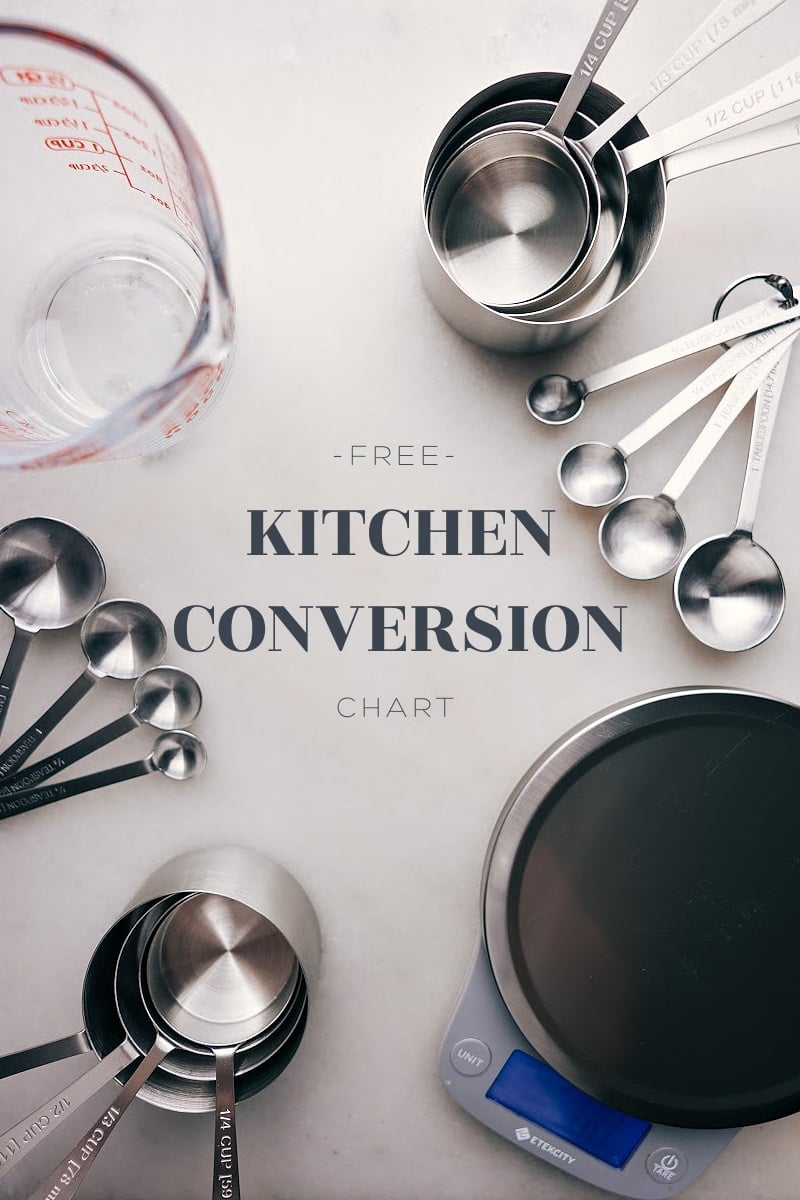
Looking to improve your cooking skills and get precise measurements every time? Check out our guide to measuring ingredients, complete with a free printable Kitchen Conversion Chart! Simply download the chart, laminate it, and post it on the inside of a cabinet or in your pantry for quick reference.
Kitchen Conversion Chart
With this chart, you’ll be able to easily convert measurements from ounces to grams, teaspoons to tablespoons, and more. It’s the perfect tool for any home cook looking to take their cooking to the next level. So download your free conversion chart today and start cooking like a pro!
Measuring Tools
Before we dive into the specifics of measuring and sharing our Kitchen Conversion Chart, let’s review the common measuring utensils to have in your kitchen:
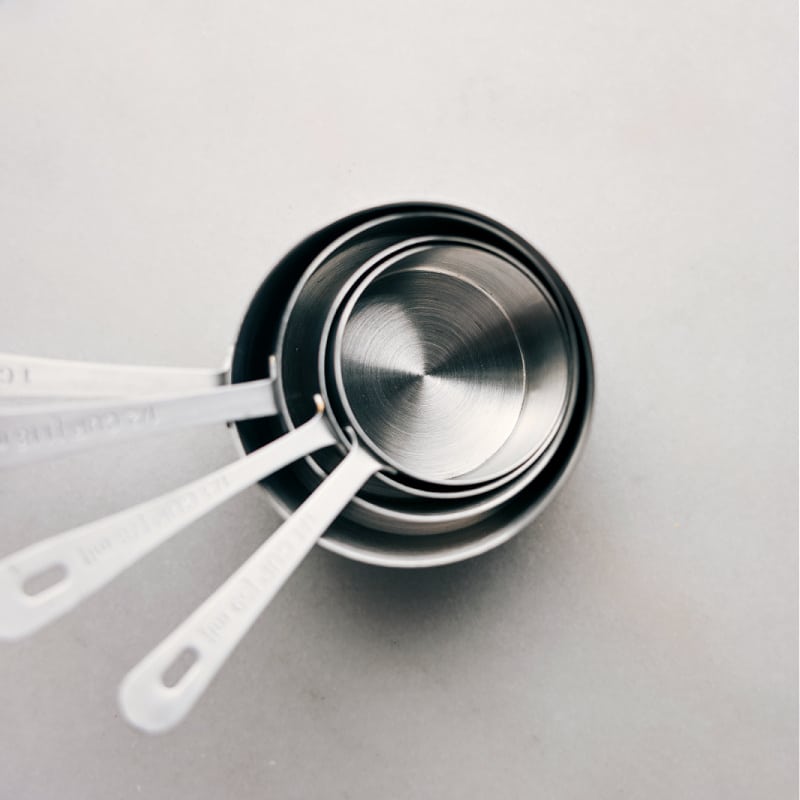
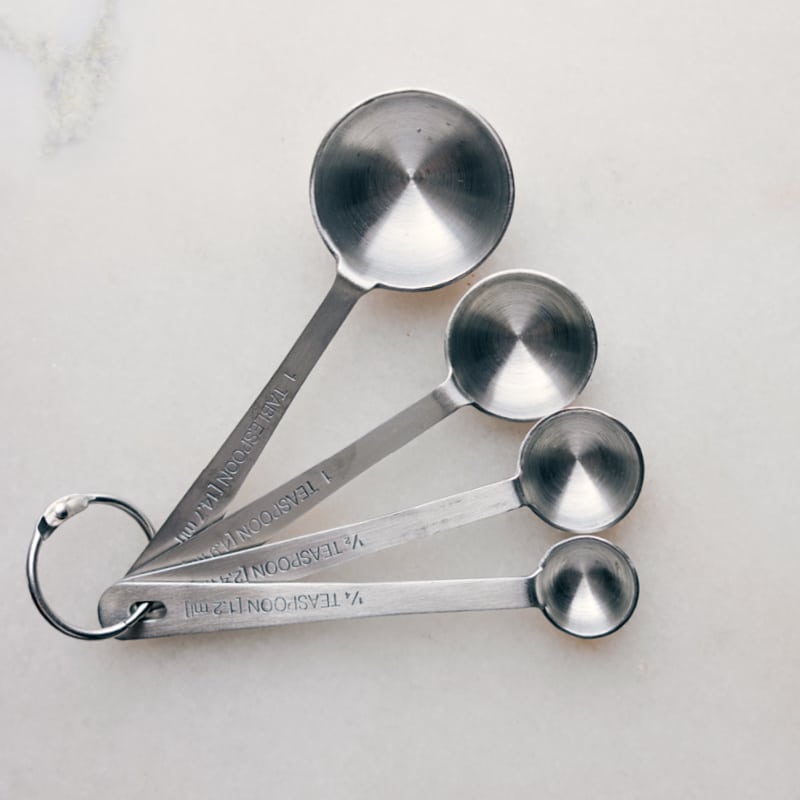
- Measuring spoon set – A set usually includes 4 spoons (¼ tsp, ½ tsp, 1 tsp, and 1 Tbsp) and can include additional spoons (⅛ tsp and ½ Tbsp).
- Dry Measuring Cup Set– A set usually includes 4 cup sizes: ¼ cup, ⅓ cup, ½ cup, and 1 cup. This type of cup is filled and leveled off with a knife or other tool.
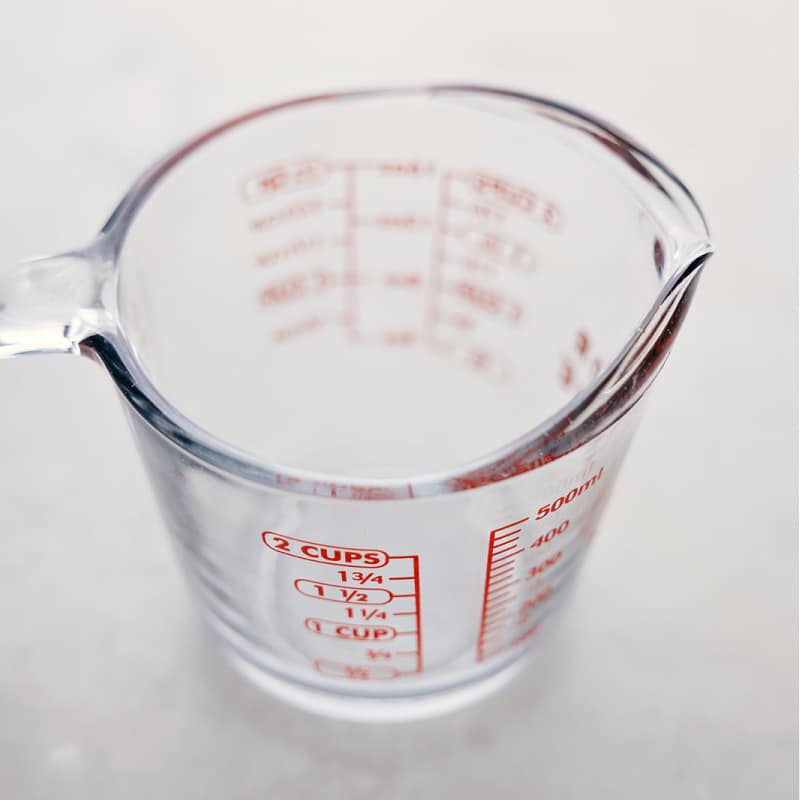
- Liquid measuring cups – These usually come in 1-, 2-, or 4-cup sizes and measure in ounces, quarts, and milliliters. Liquid measures aren’t filled to the brim, and have a handle for easy pouring.
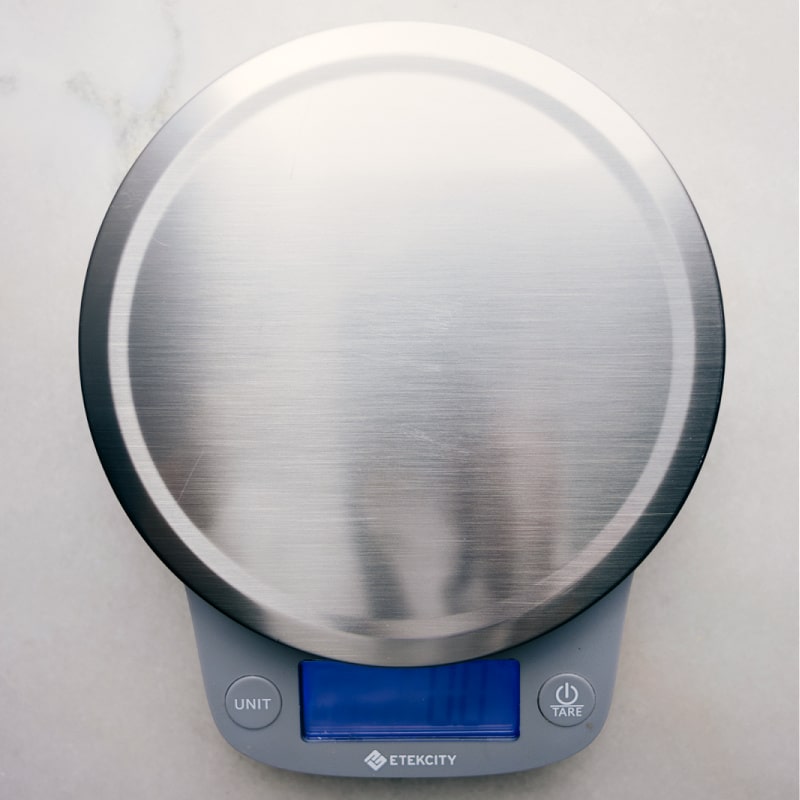
- Food scale – When baking, this is the best way to get the correct weight the recipe calls for. Bread, muffins, and other baked goods turn out best when you use exact ingredient amounts.
And, let’s quickly cover some common cooking abbreviations you might come across in recipes as well as in our Kitchen Conversion Chart:
Cooking Abbreviations
Do cooking measurement abbreviations like “tsp” and “Tbsp” have you feeling a bit confused? Don’t worry, you’re not alone! Here are some common measurement unit abbreviations to help you out:
- tsp – Teaspoon
- Tbsp – Tablespoon (could also be seen as tbsp, T, TB, Tbl, Tbs)
- C – Cup
- PT – Pint
- QT – Quart
- ML/mL – Milliliters
- L – Liters
- OZ – Ounce
- FL OZ – Fluid Ounce
- G – Grams
- LB – Pounds
With practice and repetition, these abbreviations will become second nature to you.
Now that we’ve covered the basic measuring utensils and abbreviations, let’s delve into some specifics on measuring. When measuring ingredients, it’s important to be precise to ensure the best results in your cooking and baking.
A Cup is A Cup, Right?…
A cup is a cup, right? Well, not really. Measurements vary a great deal. To be sure you’re getting the correct amount of an ingredient, measure it correctly. We’ll tell you how!
Here’s a quiz for you. Which weighs more: 16 ounces of marshmallows or 16 ounces of sweet potatoes? The answer is the sweet potatoes, right?
Not always. If you’re measuring by volume, the potatoes win. The 2-cup measure filled with sweet potatoes will definitely be heavier than that same measuring cup filled with marshmallows.
But if you’re measuring by weight, the answer is both the marshmallows and sweet potatoes. If you put a bowl on a kitchen scale and weigh out 16 ounces of marshmallows, you’ll have a very full bowl. But sweet potatoes will reach 16 ounces, when weighed, long before the marshmallows do. But they both weigh 16 ounces.
An ounce isn’t always an ounce
Measuring by weight calculates how dense or heavy an item is; measuring by volume shows how much space something uses. That’s why most devoted cooks use a kitchen scale for dry ingredients– it’s a lot more accurate. Just because a cup holds 8 ounces, that doesn’t mean it will weigh 8 ounces. Confused yet? Read on to clear things up!
Measuring cups are not interchangeable
When you learned that 1 cup equals 8 ounces, that equation was a bit oversimplified. The important thing to remember is that 1 cup equals 8 fluid ounces. That’s different from 8 dry ounces.
Liquids go in cups designed to hold the needed quantity with a bit of space at the top to avoid spillage. Hold the measuring cup at eye level to determine if the liquid has reached the line. If you look down at the cup, you may get a different perspective–so always measure at eye level.
Dry things like flour don’t go in liquid measuring cups. Dry cups have a flat top so that you can level it off with the back of a table knife. However, not everyone fills their dry measuring cup the same way. Some people scoop and pack, while others spoon and level. That means there’s a lot of variation in how much gets put into the measuring cup. Cooking experts prefer spooning. Instead of scooping the measuring cup into a canister or bag of flour, use a large spoon to spoon flour into the cup until it overflows. Then take the back of a table knife (the smooth, flat edge) to swipe across the cup to remove excess. Scooping into the bag of flour compresses the ingredients and gives you a heavy measure–and that can greatly affect many recipes. If you’ve ever had thick, dry cookies, or bread that resembled a brick, that could be why!
Hence, the kitchen scale. By weighing the dry ingredients, you’ll have exactly the correct amount. If you try it for yourself, you can see how significantly one cup of flour can vary, depending on whether the flour is scooped, packed or weighed.
But what about measuring spoons?
Good news! Measuring spoons are the same, whether you’re measuring a liquid or solid. The reason is convenience. Measuring spoons are for small quantities. A bit more or less salt probably won’t make a big difference. But if it does? You know the answer: use a scale!
So what’s the bottom line?
Read the recipe straight through, from beginning to end, for guidance. And then, check what foods you’ll be measuring. If you need 1 cup of milk, use a liquid measure. For 1 cup of flour, use a dry measure with the spoon and level technique. But to be completely accurate on dry ingredients, use the kitchen scale. If it’s a recipe that matters, take those extra steps!
Equivalents: more than one way to measure!
Let’s say you need ⅓ cup of an ingredient, but your ⅓ cup measure is in the dishwasher. What to do? Refer to this handy list of measurement equivalents and do a little bit of kitchen wizardry.
- 1 tablespoon = 3 teaspoons = ½ fluid ounce
- ¼ cup = 4 tablespoons = 2 fluid ounces
- ⅓ cup = 5 tablespoons + 1 teaspoon = 2 ⅔ fluid ounces
- 1 cup = 16 tablespoons = 8 fluid ounces = ½ pint
- 2 cups = 16 fluid ounces = 1 pint
- 4 cups (2 pints) = 32 fluid ounces = 1 quart
- 4 quarts = 128 fluid ounces = 1 gallon
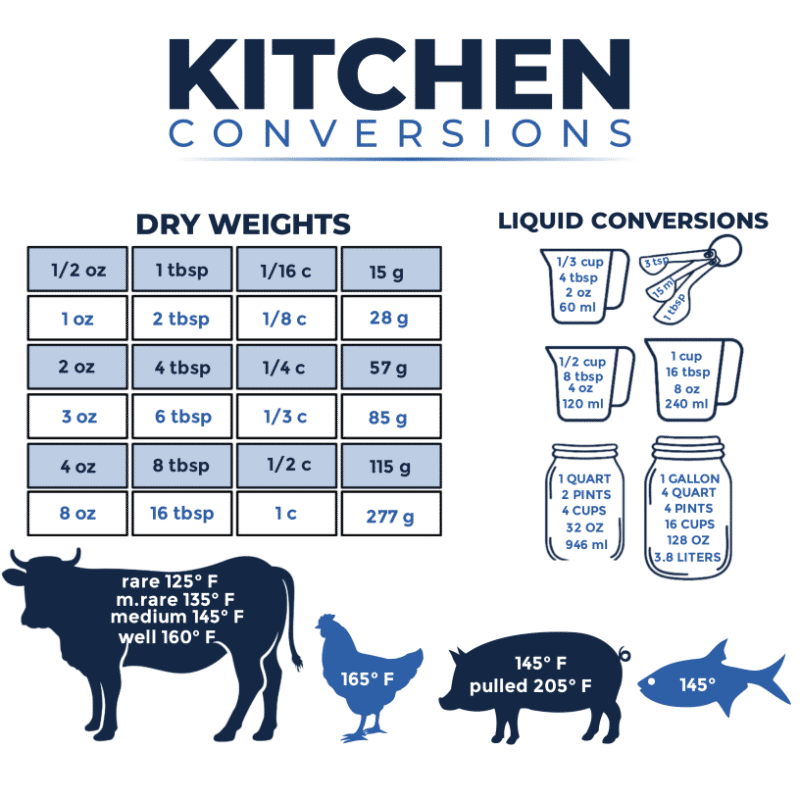
Download the Free Kitchen Conversion Chart
Keep Your Kitchen Conversion Chart Handy!
This kitchen conversion chart is so handy, you’re going to want to keep it visible! Laminate it and mount it somewhere easy to see when you’re elbow-deep in butter and flour. We suggest taping it to the inside of your kitchen cabinet or pantry so it’s easy to see. You can also keep it with your recipe binder and cookbooks so you can easily grab it when it’s time to start cooking.
Having these conversions memorized or handy in your kitchen can save time and make following recipes a breeze.
Don’t let these terms and rules discourage you. Cooking and baking bring so much satisfaction and positive feedback– it’s worth it to take your time and do it right!
Use Our Kitchen Conversion Chart To Scale These Recipes Up For A Crowd
These recipes are some of our absolute favorites for serving a crowd. To adjust the quantities for a larger group, refer to our handy Kitchen Conversion Chart which will assist you in scaling up the recipes to cater to any number of guests.










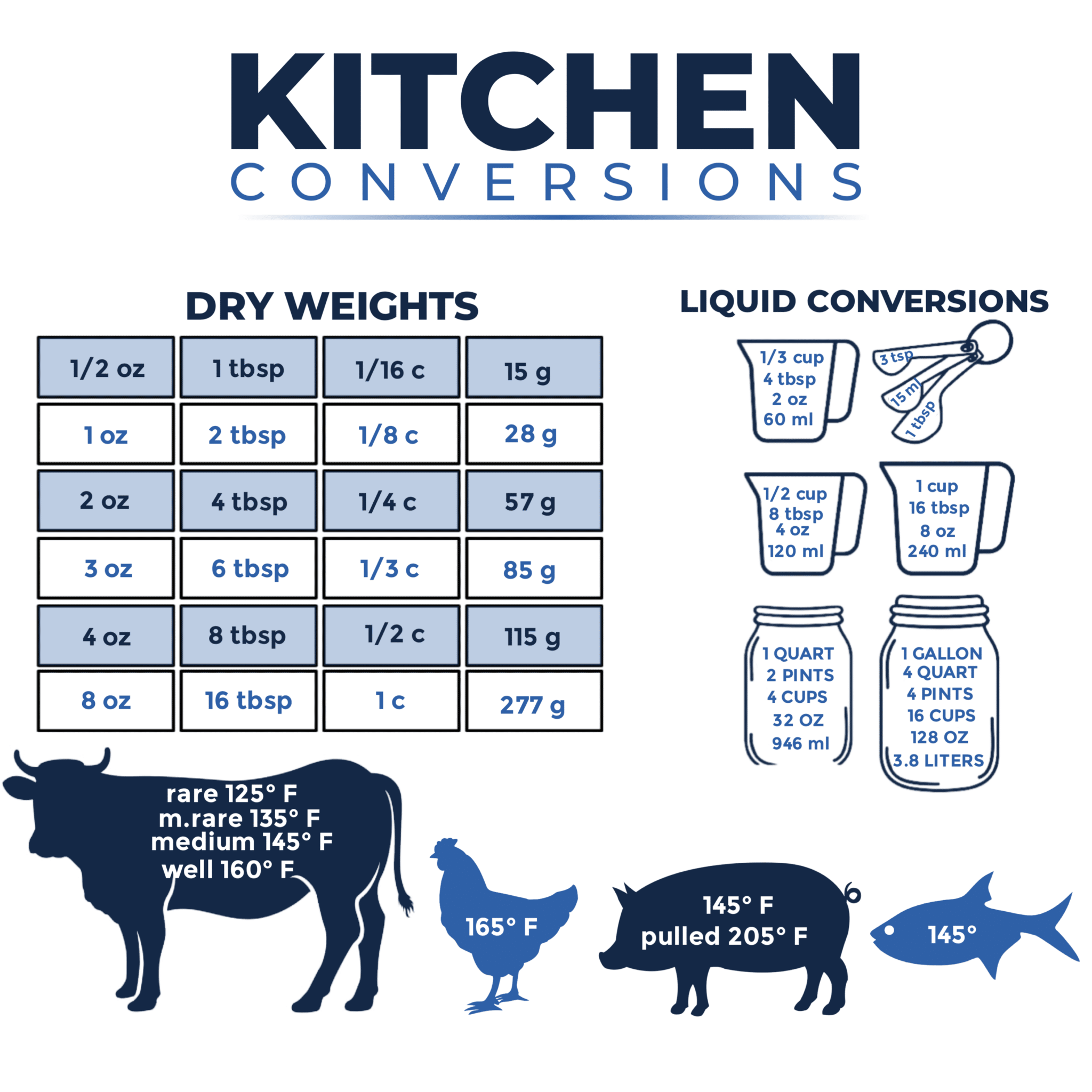
Your gallon measurement says that it is equal to 4 quarts or 4 pints, should that not be 8 pints? Otherwise, that is a great chart.