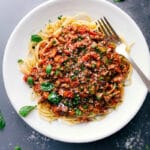
Turkey Bolognese Recipe
This Turkey Bolognese Recipe is a veggie-packed, savory, and filling dish that’s easy to make, nutritious, and perfect for weeknight dinners!
Servings: 4 servings
Cost: $13.86
Equipment
Ingredients
- 1 tablespoon olive oil
- 1/2 cup finely diced yellow onion
- 1/2 cup finely diced carrot
- 1/2 cup finely diced celery
- 1 tablespoon finely minced garlic 3 to 4 cloves
- 1/2 teaspoon dried thyme
- 1/2 teaspoon dried basil
- 1/2 teaspoon dried oregano
- Salt and pepper
- 1 pound lean ground turkey 93/7, see note 1
- 1/2 cup 100% grape juice or beef broth or red wine, see note 2
- 1 (28-ounce) can fire-roasted crushed tomatoes I highly recommend Muir Glen or Cento
- 2 tablespoons tomato paste
- 1/2 tablespoon Worcestershire sauce
- 2 bay leaves
- 2 teaspoons beef bouillon powder
- 12 ounces spaghetti
- freshly grated Parmesan cheese
- Freshly chopped parsley or basil, optional
Instructions
- Add oil to a large, deep pot (one big enough to hold all the pasta later!). Heat to medium-low, and add finely diced onion, carrot, and celery. Cook, stirring occasionally, 5–7 minutes. Add garlic and continue to cook and stir an additional 3–5 minutes until vegetables are softened and straw colored (reduce heat if they start browning). Move veggies to the sides of the pot and increase heat to medium-high.
- Add ground turkey to the center. Brown the turkey, crumbling and breaking it up as you stir. Cook 5–7 minutes or until mostly browned through. Drain any accumulated liquid from the turkey if needed. Add in dried thyme, dried basil, and dried oregano. Season to taste with salt and pepper; I add 1/2 teaspoon of each. Stir. Immediately pour in grape juice (see note 2) and scrape up any browned bits from the bottom of the skillet. Cook, stirring until juice is reduced in half, about 1–2 minutes.
- Reduce heat to medium. Stir in tomato paste, bouillon powder, and Worcestershire sauce. Add crushed tomatoes and stir. Add bay leaves and bring to a simmer. Simmer, uncovered, 10–15 minutes or until thickened and fragrant, stirring occasionally. Taste and adjust to personal preference, adding more salt and pepper as needed. Also taste for sourness—if you use high-quality tomatoes, it shouldn’t be sour. On occasion, however, you might need a teaspoon or so of granulated sugar to balance out the acid.
- There are two ways to serve: Either emulsify the pasta: (authentic way; skip to step #7) or just spoon the sauce over the cooked pasta.
- Meanwhile, follow package directions to cook the spaghetti to al dente. (Don’t forget to salt the water generously! I add 1 teaspoon salt to every 4 cups of water.) Remove about 1 cup of the pasta water before draining the spaghetti if you want to emulsify.
- Garnish with fresh chopped parsley or basil and freshly grated Parmesan cheese as desired.
- To Emulsify: Bring a large pot of salted water to boil. Follow package directions to cook the pasta but don’t drain (yet!). Scoop out a cup of pasta cooking water and set aside. Now, you can drain the pasta. Add half the Bolognese sauce to the pot used to cook the pasta. Add hot drained pasta right on top. Toss the pasta and sauce gently for a couple of minutes, slowly adding the reserved pasta water as needed until the sauce thickens and generously coats the pasta. (I usually only use 1/4 to 1/2 cup of reserved pasta water, but it varies depending on a lot of factors, so add just enough until you have a thick, rich sauce coating the pasta).
Video
Notes
Note 1: I recommend getting lean (93/7) ground turkey as opposed to 99% lean ground turkey, which tends to dry out and have very little flavor. If you can get ground turkey thigh meat, that’s even better! I also recommend ground turkey from a carton as opposed to a chub (cylindrical package)—carton turkey tends to have better flavor and is less watery.
Note 2: Traditional Bolognese uses wine instead of grape juice or beef broth. If you’d like to use wine, you can substitute a medium-body red wine such as pinot noir or merlot. You may need a pinch or two of sugar to counteract the acidity.
Storage: Make Turkey Bolognese up to 5 days ahead and reheat on low. It tastes better the next day! Use any leftover sauce over these Stuffed Shells. To freeze the sauce, ensure it has cooled, then store in a freezer-safe container and freeze up to 3 months.
Nutrition
Serving: 1serving | Calories: 546kcal | Carbohydrates: 70g | Protein: 34g | Fat: 15g | Saturated Fat: 3g | Cholesterol: 84mg | Sodium: 541mg | Potassium: 589mg | Fiber: 4g | Sugar: 5g | Vitamin A: 205IU | Vitamin C: 5mg | Calcium: 65mg | Iron: 3mg